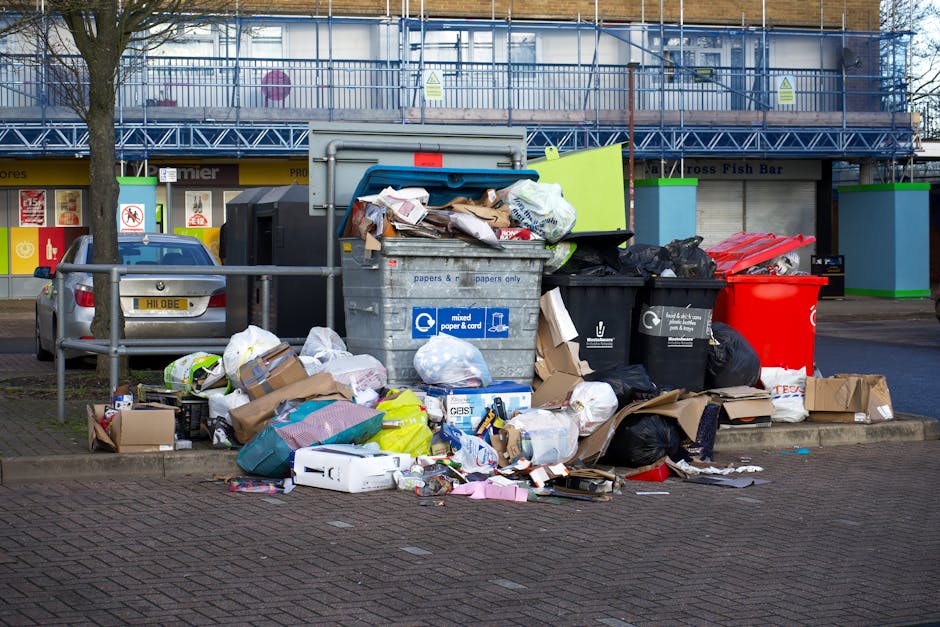
Bulky waste removal for Catford shopping centre businesses
If you run a shop, kiosk, cafe, unit, or service counter in or around Catford, bulky waste has a habit of appearing at the worst possible moment. One minute the stockroom is fine; the next, you've got a broken display stand, a worn-out chair, flattened packaging, a damaged fridge, or a pile of awkward items that simply will not fit into the regular bin. Bulky waste removal for Catford shopping centre businesses is the practical answer when you need large items taken away quickly, safely, and without turning a trading day into a mini demolition site.
The real issue is not just size. It is timing, access, reputation, and keeping your unit tidy enough that customers do not see a mess before they see your window display. In a busy shopping centre, there's little room for error. This guide breaks down how the process works, what to expect, what to avoid, and how to choose the most sensible option for your business. A bit of know-how saves a lot of hassle, truth be told.
Contents
- Why bulky waste removal for Catford shopping centre businesses matters
- How bulky waste removal works
- Key benefits and practical advantages
- Who this is for and when it makes sense
- Step-by-step guidance
- Expert tips for better results
- Common mistakes to avoid
- Tools, resources and recommendations
- Law, compliance, standards, or best practice
- Options, methods, or comparison table
- Case study or real-world example
- Practical checklist
- Conclusion
- Frequently asked questions
Why bulky waste removal for Catford shopping centre businesses matters
Shopping centres run on flow. People move, deliveries arrive, stock changes, displays get updated, and waste has to disappear without getting in the way. Bulky items interrupt that flow in a way normal rubbish does not. A single old sofa in a staff room, for example, can block access, create a fire safety nuisance, or make a tidy unit look neglected. A stack of broken shelving in a back corridor is even worse because it can obstruct shared areas and become a trip hazard.
For businesses in Catford, this matters for a few very practical reasons. First, space is tight. Back-of-house storage is usually at a premium, and bulky waste can swallow it fast. Second, there are often shared loading bays, service routes, and collection windows. Miss those, and you may be sitting on unwanted items for days. Third, presentation matters. A retail unit with clutter in view can quietly damage customer confidence. Nobody wants to browse past a wobbly filing cabinet or a half-dismantled display plinth.
There is also the operational side. Staff should not be expected to wrestle heavy items through a busy centre with no clear plan. In our experience, the jobs that go smoothly are the ones where the removal is treated like an operational task, not an afterthought. That means planning access, handling, and disposal together.
Expert summary: bulky waste is not just "big rubbish". For shopping centre businesses, it is a space, safety, and scheduling problem as much as a disposal problem. Solve the three together and the whole process gets easier.
How bulky waste removal for Catford shopping centre businesses works
The process is usually straightforward, but the details matter. Most commercial bulky waste removals follow a similar pattern: assess the items, confirm access, arrange collection, move the waste safely, then dispose of or recycle it appropriately. Simple on paper. Slightly less simple when there's a lift booking, a tight service entrance, and a centre manager waiting for the corridor to be clear by lunchtime.
Typically, a business will start by listing what needs removing. That could include furniture, damaged fixtures, old stockroom shelving, broken appliances, packaging, or mixed light commercial waste. The next step is to check whether the items can be lifted by hand, need two-person handling, or require specialist loading. Some providers offer a man and van style collection for smaller bulky jobs, while larger or heavier clearances may suit a skip, grab hire, or dedicated removal service.
It is also worth thinking about what happens after collection. Responsible disposal is not just about getting rid of items; it is about separating reusable or recyclable material where possible. That is why many businesses choose a provider that offers waste recycling services alongside removal. For mixed commercial waste, this can make the whole thing tidier and easier to justify internally too.
What usually happens on collection day
- The team confirms the items and access point.
- They assess whether anything needs dismantling first.
- Items are lifted, carried, or loaded safely.
- The waste is taken to the appropriate disposal or recycling route.
- Any paperwork or confirmation is provided if required.
That sounds tidy because, in the best cases, it is. But the best cases usually happen because someone took ten minutes earlier in the week to plan it properly. Small detail, big difference.
Key benefits and practical advantages
The first benefit is obvious: you reclaim space. In a commercial setting, space is money. A freed-up stockroom can hold sellable goods, a clearer corridor improves movement, and a clean service area makes deliveries less chaotic. Those gains add up. You feel them in daily work, not just on paper.
The second benefit is speed. Bulky waste removal can often be arranged much faster than many businesses expect, especially when the items are already grouped and easy to access. If you've ever tried to work around a broken counter for a week because "we'll sort it later", you know how expensive delay can be in practice. Later has a way of becoming never.
Third, there is reputational value. Customers notice messy entrances, staff areas that spill into customer spaces, and overflowing back-of-house storage if they glimpse it. A tidy environment gives the impression of control. That matters in shopping centres, where many businesses compete for attention in a very small footprint.
Other practical advantages include:
- reduced manual handling risk for staff
- less disruption to trading hours
- better compliance with site rules and access controls
- more predictable disposal of awkward items
- the chance to recycle or reuse suitable materials
To be fair, the emotional benefit is underrated too. Clearing out dead stock, worn furniture, or damaged equipment often gives teams a little lift. The place feels lighter. You notice it straight away when you walk in the door at 8am and the clutter isn't there anymore.
Who this is for and when it makes sense
Bulky waste removal is useful for almost any shopping centre business that handles fixtures, furniture, packaging, equipment, or back-of-house storage. It is especially relevant if your unit changes use, gets refitted, or refreshes stock presentation regularly.
You may need it if you are:
- a retailer replacing shelving, tills, mannequins, or display units
- a cafe or takeaway clearing tables, chairs, fridges, or counters
- a salon, clinic, or service business removing old chairs, mirrors, cabinets, or reception furniture
- a store room manager dealing with damaged pallets, packaging, or obsolete stock fixtures
- a fit-out or refit team clearing out old contents before a new layout goes live
Sometimes the need is obvious. A broken fridge is not going to wait politely in the corner. Other times, it creeps up on you. One shelf replaced, then another, then suddenly the back room is full of furniture nobody wants to lift twice. That is usually the point where removing bulky waste becomes less of a nice-to-have and more of a practical reset.
If your business shares service access with other units, timing matters even more. A collection that causes corridor congestion at the wrong moment can annoy neighbours and create avoidable delays. Planning around footfall, deliveries, and centre access is not glamorous, but it keeps everybody happier.
Step-by-step guidance
If you want the process to go smoothly, treat it like a small project. Here's a sensible way to handle it.
- Identify everything that needs removing. Walk the unit properly. Check stockrooms, display areas, back corridors, and staff spaces. People often forget one awkward item until the last minute.
- Separate bulky waste from reusable items. If something can be donated, resold, or redeployed elsewhere in the business, keep it out of the removal pile. That saves cost and reduces waste.
- Check dimensions and weight. You do not need to measure every spoon, obviously, but do note large items such as desks, cabinets, appliances, and shelving. It helps the provider plan the right vehicle and crew.
- Confirm access points. Think about lifts, loading bays, service doors, parking restrictions, and any centre-specific rules. One missed access detail can throw the whole day off.
- Book a collection window. Choose a time that sits comfortably around customer traffic and deliveries. Early morning often works well, but not always. Every site has its quirks.
- Prepare items for easy loading. Empty drawers, unplug appliances safely, remove loose contents, and dismantle items only if that is genuinely helpful.
- Clear the route. Staff should not have to dodge stock cages and mop buckets while carrying a heavy wardrobe. Make the path obvious and safe.
- Get confirmation after removal. Whether that is a simple receipt or an internal record, keep a note of what was taken and when.
One little practical tip: if your waste includes mixed materials, group them loosely by type. Cardboard with cardboard, wood with wood, furniture together. It makes the load easier to handle and often helps with recycling afterwards.
Expert tips for better results
The biggest tip is this: do not wait until the unit is overflowing. Bulk removal works best when you act before the clutter becomes part of the scenery. Once staff get used to stepping around a broken item, it tends to stay there far too long. Humans are funny that way.
Here are a few habits that make a real difference:
- Book around your quietest trading period. Less foot traffic means easier access and less stress.
- Photograph the items in advance. That helps with planning, especially if there are awkward or unusually large pieces.
- Keep hazardous material separate. Do not mix batteries, chemicals, or clinical waste with general bulky items unless the provider has confirmed they can handle it.
- Ask about recycling routes. If sustainability matters to your business, choose a service that can explain where the waste goes and what is likely to be recycled.
- Protect floors and doorways. A few extra minutes with covers or boards can save a scratched floor and a headache later.
Another useful habit: brief the staff member who will oversee the removal. It does not need to be a major meeting. Just enough so everyone knows who is unlocking access, who is checking the route, and who signs things off. Simple, but it avoids that awkward "I thought you were handling it" moment.
Small but useful reality check: the cheapest-looking option is not always the cheapest once delays, extra labour, or missed access are added in. You know how it goes.
Common mistakes to avoid
There are a few mistakes that crop up again and again in commercial bulky waste removal. The good news? They're easy to avoid once you know them.
Leaving planning until the last minute. This is the classic one. A refit is happening tomorrow, the old fittings are still in place, and someone suddenly needs a clearance slot. Panic is not a strategy.
Underestimating how much space bulky waste takes. One item rarely arrives alone. Once you start clearing, you usually find more to remove than expected. That's normal. Just plan for it.
Forgetting access restrictions. Shopping centres can have specific rules about vehicle movement, loading times, security check-in, and lift use. If you ignore those, collection gets messy quickly.
Mixing waste types without checking. A load of mixed general waste, fixtures, and something hazardous can change the handling requirements. Separate anything uncertain and ask first.
Assuming every bulky item is the same. A flat-packed shelf is very different from a refrigeration unit or a heavy cabinet. The method should match the item, not just the category.
Not preparing staff. If employees do not know what is being removed, items can disappear by mistake or remain blocked behind stock. Mild chaos. Entirely avoidable chaos.
It sounds basic, I know. But basic mistakes are exactly what slow down commercial clearances.
Tools, resources and recommendations
You do not need a warehouse full of kit to manage a bulky clearance well, but a few tools help enormously. For smaller items, sack trucks, dollies, and straps reduce strain and make movement safer. For dismantling old display fixtures, basic hand tools, gloves, and eye protection are usually sensible. If an item is awkward or heavy, don't be heroic. Use proper lifting support or let the removal team handle it.
For planning, a simple checklist, phone camera, and site access notes are often enough. A photo taken in the morning can be surprisingly useful by the afternoon, especially if the person arranging the collection is not the person on site when the job happens. That happens a lot in busy businesses.
In terms of service types, Catford businesses often compare:
- Bulky item collection for single or small-volume removals
- Commercial skip hire for larger clear-outs or ongoing works
- Wait and load skip hire when space is tight and you cannot leave a skip on site
- Man and van style services for flexible loading and quick turnarounds
- Grab hire or larger clearances where access and volume make that route more practical
If your job also involves old fittings, packaging, or construction leftovers from a refit, related services such as commercial skip hire, skip hire, or construction waste clearance may suit the wider project better than a one-off item collection. For store changes and overhauls, it can also help to look at office clearance if the business has admin areas, or rubbish removal for smaller ad hoc loads.
Law, compliance, standards, or best practice
Commercial waste handling in the UK is not something to be casual about. The exact duties can depend on the type of waste, how it is stored, and who is transporting it. For a shopping centre business, the safest approach is to treat bulky waste as a managed business process, not just a clean-up task.
In practice, that means you should make sure waste is transferred to a legitimate carrier, stored safely before collection, and separated where needed. Some items, such as refrigeration units, electrical equipment, or anything with potentially hazardous components, may require extra care. If something contains chemicals, oils, batteries, or other risky materials, do not assume it can go with general bulky waste. Ask first.
Best practice also includes:
- keeping the site tidy and access routes clear
- avoiding manual handling risks wherever possible
- using suitable PPE when moving awkward items
- checking whether permits or permissions are needed for containers or skips
- keeping basic records of what was removed and when
If you are unsure about a material, treat caution as your default. That is the sensible route, and usually the least painful one later. Businesses sometimes focus so much on speed that they forget traceability. Not ideal. A few notes and a few questions up front can prevent a lot of bother.
Related pages such as skip permits, what can go in a skip, and health and safety policy can help you think through the practical side before booking. If sustainability is part of your internal policy, recycling and sustainability is also worth reviewing.
Options, methods, or comparison table
Different bulky waste jobs call for different methods. The best choice depends on volume, access, timing, and whether the waste is mixed or relatively uniform. Here's a simple comparison to make that easier.
| Method | Best for | Advantages | Limitations |
|---|---|---|---|
| Bulky item removal | Single items or small batches of large waste | Quick, flexible, minimal fuss | Not ideal for very large volumes |
| Commercial skip hire | Ongoing refits, mixed waste, larger clear-outs | Good for volume and staged loading | Needs space and sometimes permits |
| Wait and load | Sites with restricted space or short access windows | No skip left on site, useful in busy areas | Requires immediate loading and coordination |
| Man and van | Flexible local removals, awkward access, moderate loads | Handy for fast collections and mixed items | May be less efficient for large volumes |
| Grab hire | Large or heavy clearances with suitable access | Fast loading for substantial waste piles | Depends on site layout and access |
For many Catford shopping centre businesses, the decision comes down to space. If you can't spare room for a skip, and you need the job done quickly, a removal-based approach or wait and load skip hire may be the neatest fit. If you are clearing a unit during a refit, a larger solution such as builders skip hire or site clearance may be more practical.
Case study or real-world example
Picture a small retail unit near a busy centre walkway. The business is replacing old display furniture, a damaged stock cabinet, and an under-counter fridge that has finally given up. The stockroom is cramped, deliveries still need to come in, and there is only a narrow service window before lunchtime footfall builds.
The first instinct might be to "just move it all to the back" and sort it later. That nearly always backfires. Instead, the manager lists each item, checks access through the service door, and asks staff to empty the cabinet the afternoon before. They also confirm that the fridge will need to be handled separately from the lighter items. Smart move, because fridges are awkward enough on their own without being surrounded by loose packaging.
On collection day, the team clears the route, the bulky items go out in one planned load, and the store is back to normal before the afternoon rush. No corridor pile-up. No last-minute guessing. No apologetic shuffle past customers with a broken chair balanced on a trolley. That last part alone is worth avoiding.
The useful lesson is simple: the smoother the preparation, the less time the clearance steals from trading. It really is that straightforward.
Practical checklist
Use this before arranging bulky waste removal for your Catford shopping centre business.
- List every item that needs removing.
- Separate reusable, recyclable, and waste items.
- Check for anything hazardous or specialist.
- Measure large items roughly and note weight concerns.
- Confirm access routes, lifts, and loading bay rules.
- Choose a collection time that suits trading hours.
- Clear the path from the unit to the exit.
- Brief staff on what is being removed.
- Protect floors, doors, and walls where needed.
- Keep a record of the collection and any paperwork.
- Ask about recycling and disposal routes.
- Review whether a different method would be better next time.
If you can tick most of those off, you are already ahead of the game. Not perfect, just organised. And that is usually enough.
Conclusion
Bulky waste removal for Catford shopping centre businesses is really about keeping your operation clean, safe, and workable. When the plan is clear, bulky items stop being a nuisance and start becoming just another managed task. That is the difference between a cluttered, frustrating week and a unit that feels ready for customers, staff, and the next bit of growth.
Whether you are dealing with old shop fittings, damaged furniture, unwanted appliances, or a refit clear-out, the best results come from simple preparation, sensible timing, and a service that understands commercial access. Nothing flashy. Just the right process, done properly.
If your business is facing a bulky clearance and you want it handled without disrupting the trading day, now is a good time to plan the next step.
Get a free quote today and see how much you can save.
And once the last awkward item is gone, you'll feel the difference straight away. A bit more room. A bit less stress. Funny how that changes everything.
Frequently Asked Questions
What counts as bulky waste for a shopping centre business?
Bulky waste usually means items that are too large or awkward for normal bins, such as furniture, shelving, counters, cabinets, display units, appliances, and large broken fixtures. In a shopping centre, it often includes anything that takes two people to move safely or needs careful loading.
Can bulky waste be removed during trading hours?
Sometimes, yes, but it depends on access, footfall, and the centre's rules. Many businesses prefer early morning or quieter periods so staff can move items without blocking customers or neighbours. If the unit is busy, off-peak timing is usually the safer bet.
Is bulky waste removal better than hiring a skip?
It depends on the job. Bulky waste removal is often better for single items, smaller loads, or spaces with limited access. A skip may suit larger refits or ongoing clear-outs. If you have little room outside the unit, a removal-based service can be much easier.
What should I do before the collection team arrives?
Empty the items where possible, clear the route, confirm access instructions, and separate anything hazardous or sensitive. A little prep goes a long way. If staff know the plan, the collection usually runs far more smoothly.
Can old shop fittings and broken furniture be taken away together?
Often yes, if the items are suitable for the same disposal route. But if you have mixed materials, electrical equipment, or anything potentially hazardous, it is worth checking first. The mix of waste can affect how it is handled and where it goes next.
Do I need a permit for bulky waste removal?
Not usually for direct removal from inside your unit. Permits are more commonly relevant when a skip or container is placed on a public road or another controlled area. If you are unsure, ask before booking so there are no last-minute surprises.
How can I reduce the cost of bulky waste removal?
Group items together, remove reusable things first, and make access as easy as possible. Good planning reduces labour time and wasted trips. Comparing collection methods can also help, because sometimes a different option fits the job better and saves money.
What happens to the waste after it is collected?
That depends on the provider and the waste type. Ideally, reusable materials are separated where possible and recyclable items are diverted from general disposal. For business waste, it is sensible to ask how the load will be handled rather than assuming everything follows the same route.
Can bulky waste include electrical items like fridges or printers?
Yes, but electrical items often need special handling. Fridges, printers, monitors, and similar equipment may have components that should not be treated like ordinary furniture. Check in advance so the collection is set up properly.
What if I only have one or two awkward items?
That is still a valid reason to arrange removal. In fact, one or two heavy items can be more of a nuisance than a full clear-out because they linger. A quick collection can be the most efficient way to deal with them.
How fast can bulky waste be removed in Catford?
Timing depends on the service, access, and the size of the load. If the items are ready and the collection window is flexible, it can often be arranged quite quickly. The key is to be clear about what needs taking and when you need it gone.
Is bulky waste removal suitable for a full unit clearance?
Yes, but if you are clearing an entire shop or commercial unit, you may need a larger or more structured service. In those cases, options like site clearance, commercial skip hire, or a planned mixed-load removal can be more efficient than handling items one by one.
Sometimes the smartest move is simply getting the clutter out of the way so the business can breathe again.